Samples
Real work product, with the method behind it.
Pages, slides and working documents from Blackridge Press programs. Each caption says what the sample shows and which learning-engineering method it demonstrates. Client work is shown only with written permission.
Design documents
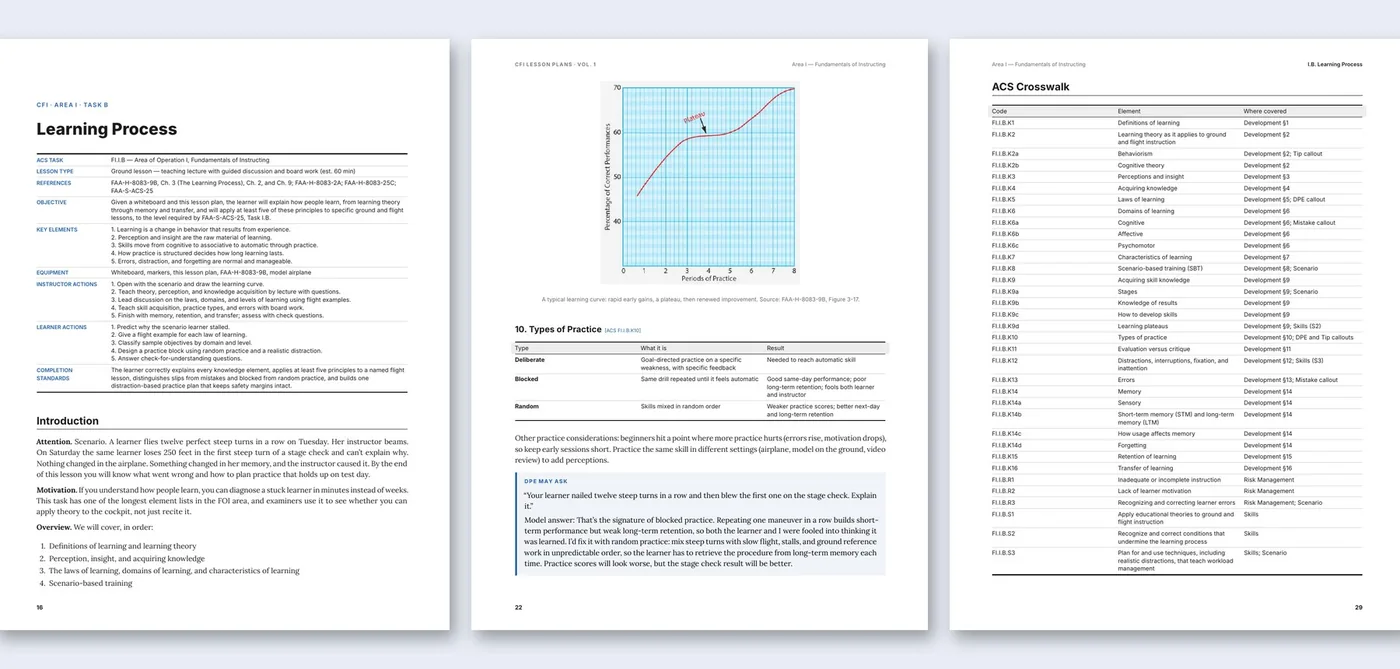
Lesson plans built from the standard.
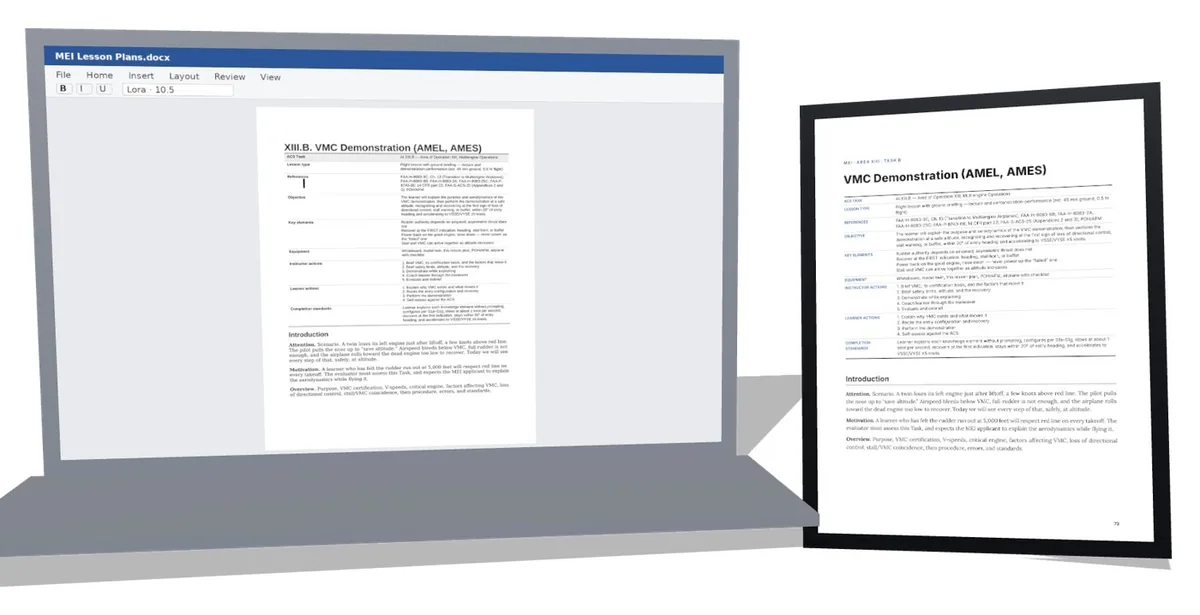
From the CFI, CFII and MEI Lesson Plans: 114 lessons, each traced element by element to its FAA standard.
Video lessons
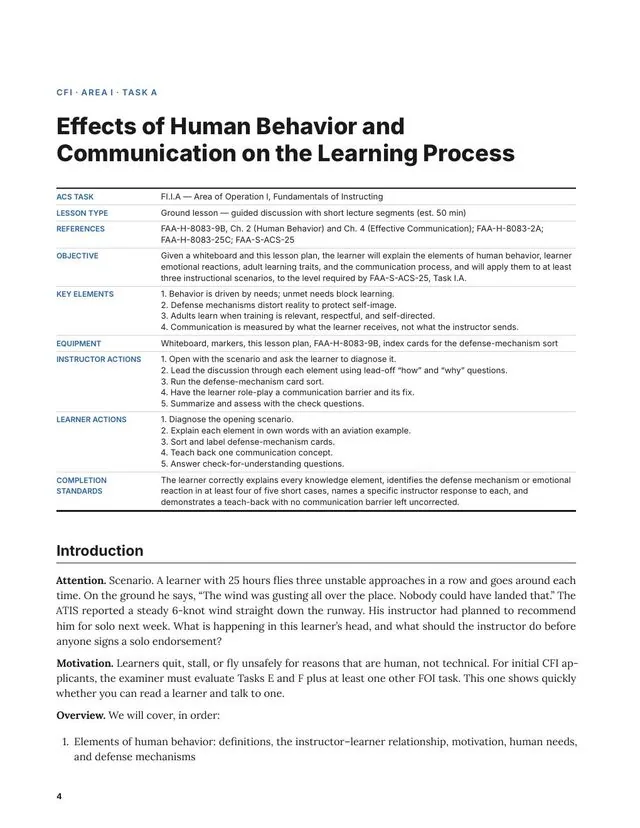
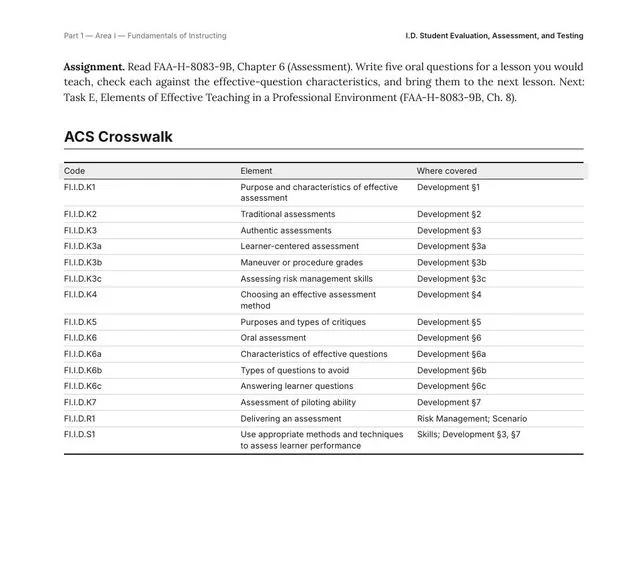
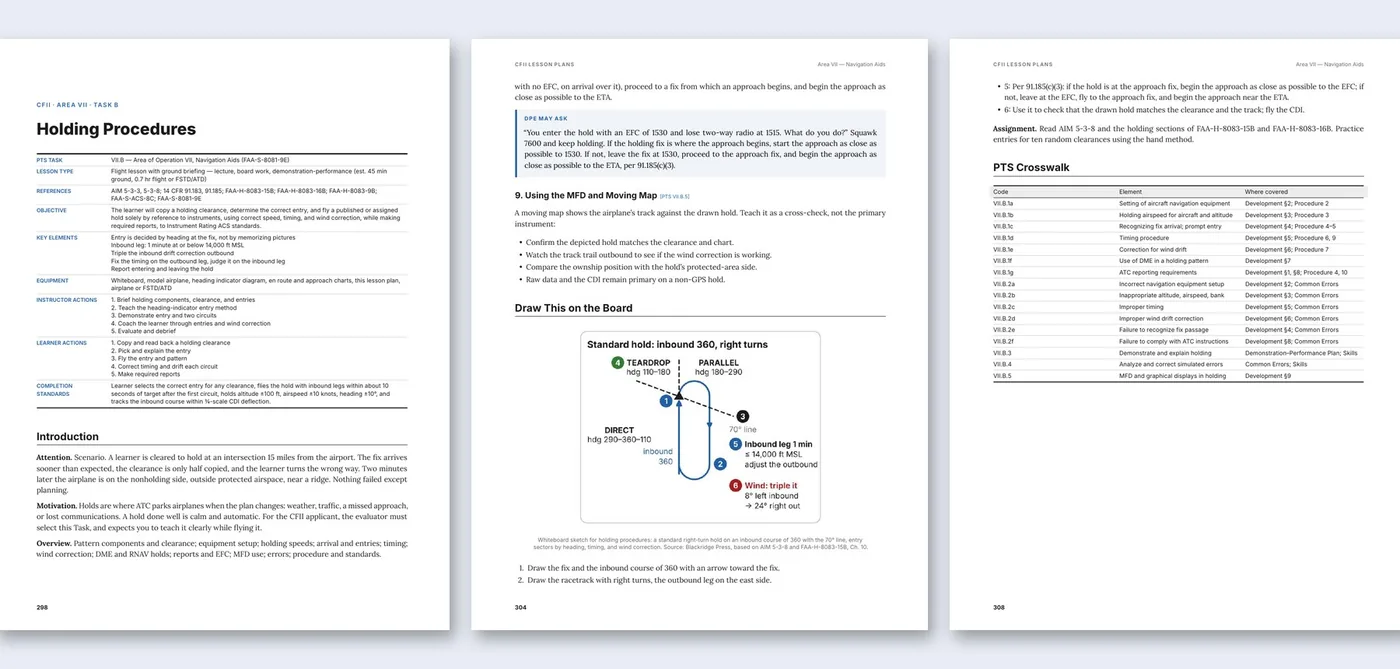
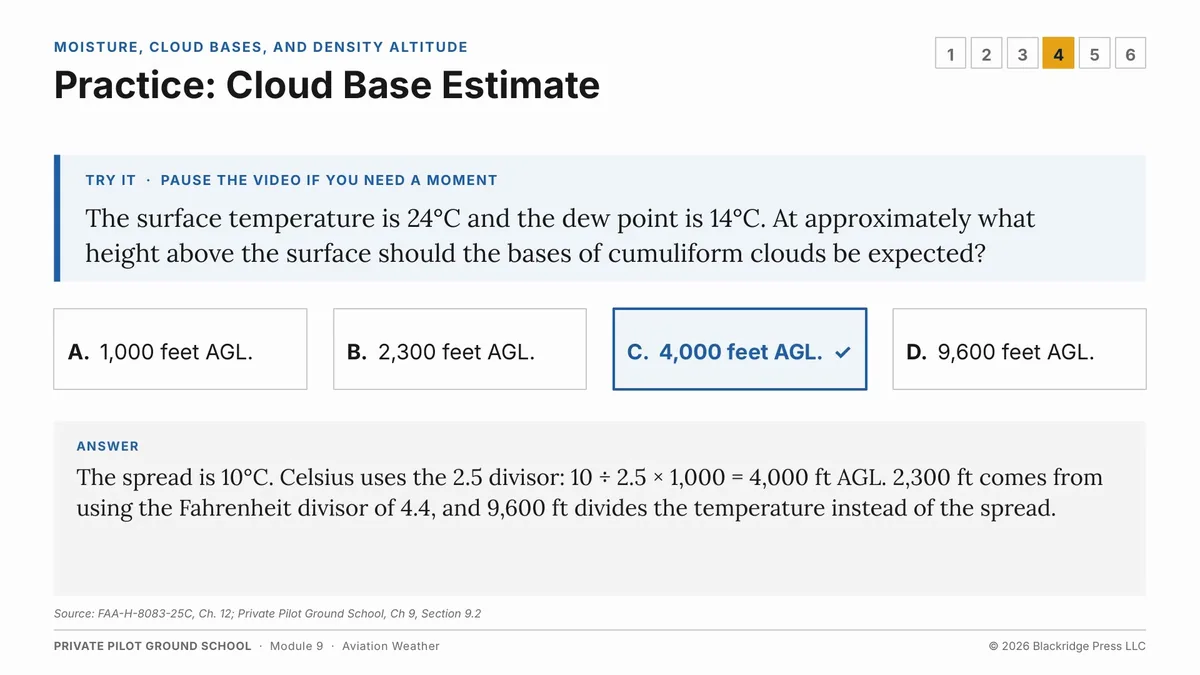
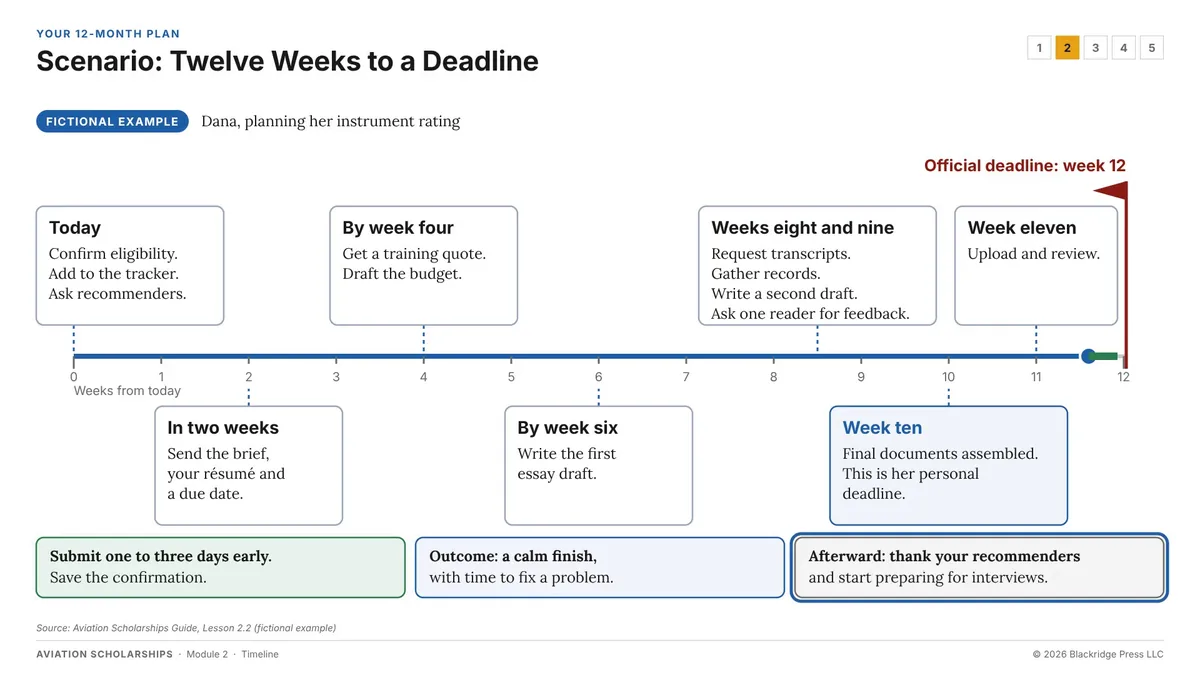
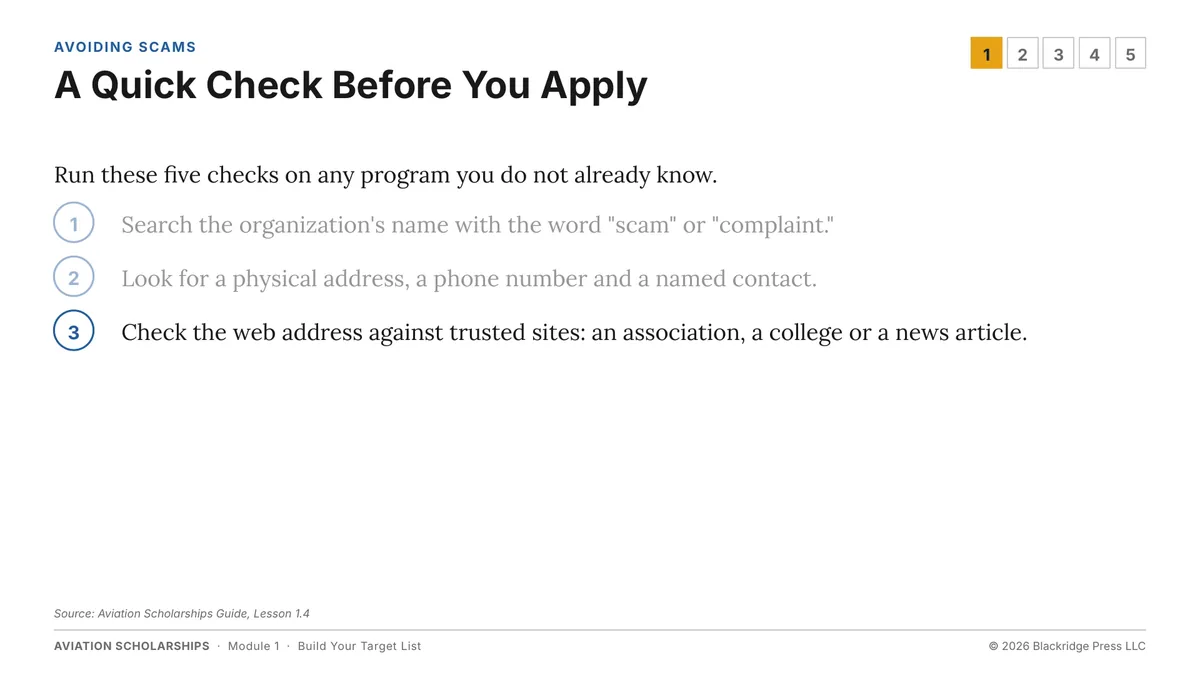
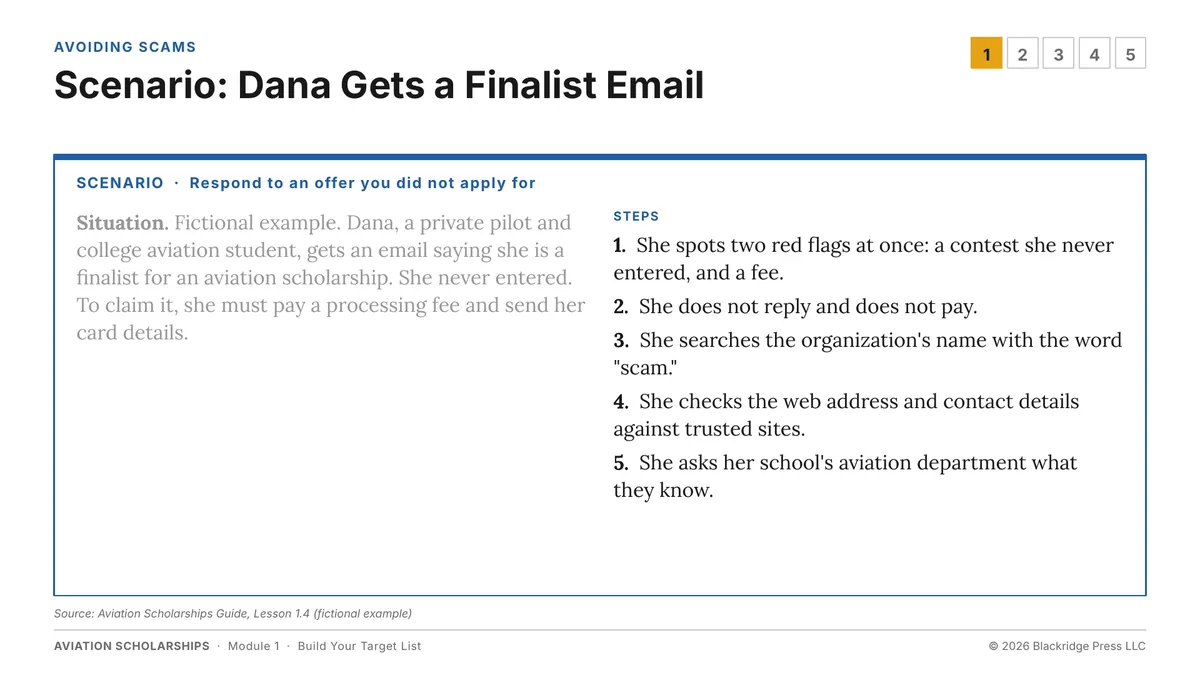
Slides from our narrated courses.
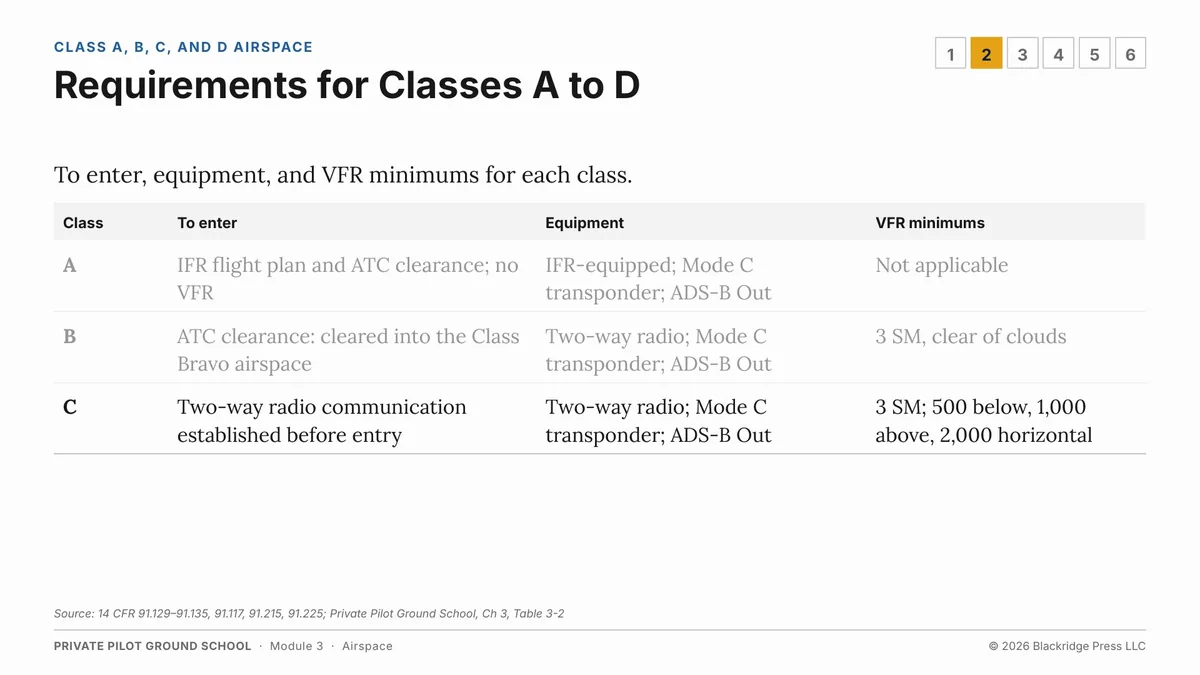
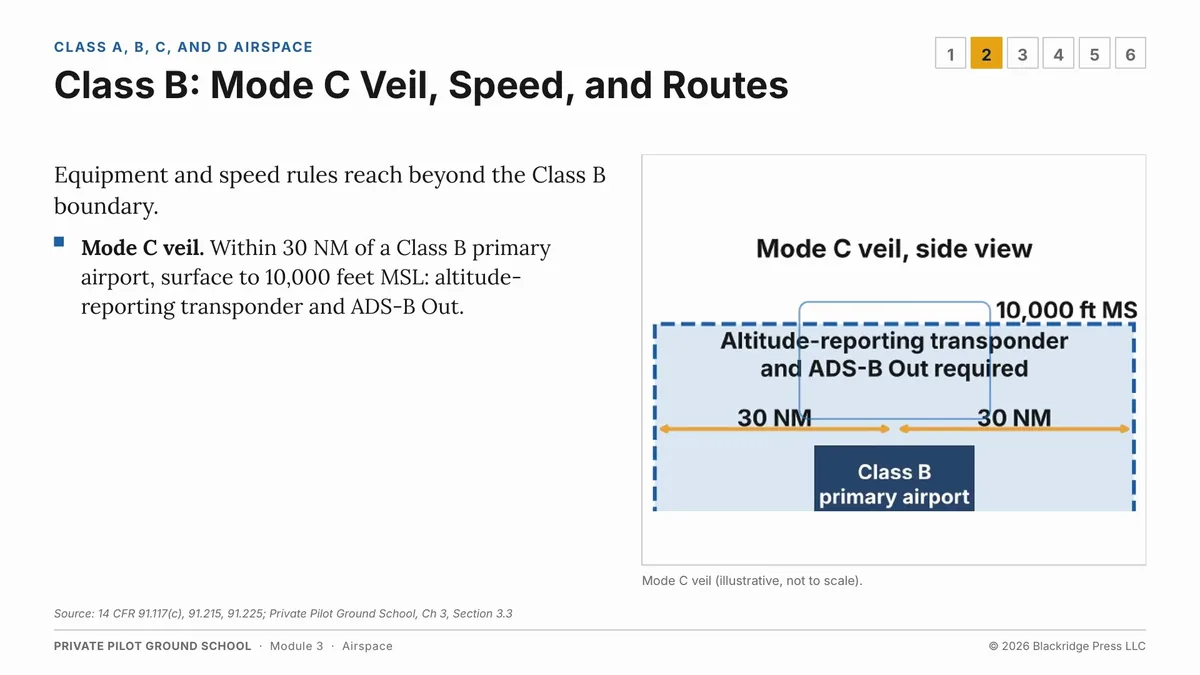
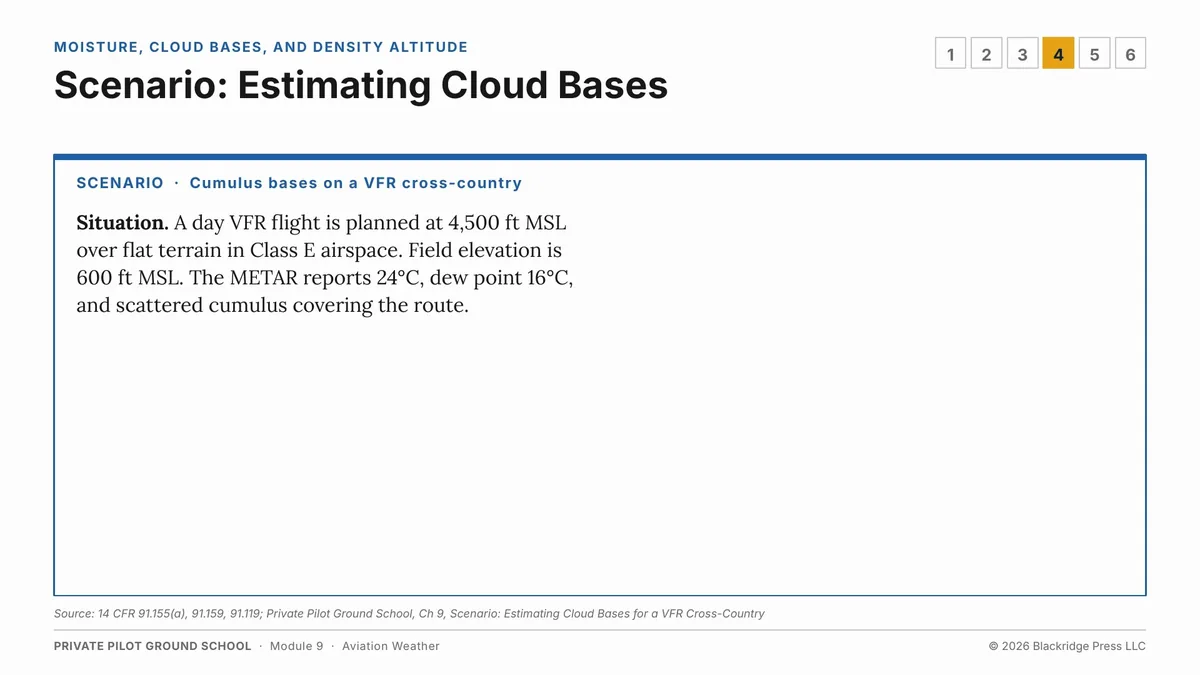
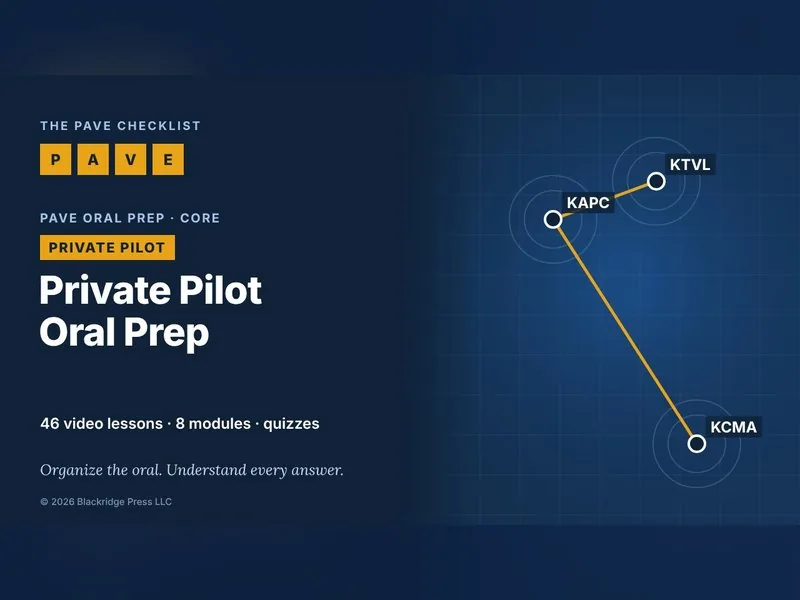
Still frames and slides from the Private Pilot Ground School, the free scholarship course and the PAVE Oral Prep course. Every slide carries a source line.
Working documents
The parts clients usually never see.
The audit log and the style guide are what keep a course accurate and consistent. In an engagement, you receive both.
Audit log · Scholarship course · finding S1-01
- severity
- Medium
- type
- Fact
- where
- Module 1, slide 21: on-screen text, narration and source line; guide Lesson 1.4
- as written
- Seminar pressure attributed to FTC enforcement cases
- correct
- Seminar pressure comes from the FTC consumer advice page; the enforcement release cited does not mention seminars
- evidence
- Both FTC pages checked; quoted text recorded in the log
- status
- Fixed: text, narration and source now cite both pages
Narration style guide · excerpt
- Spoken, not written. Short sentences, usually 8–18 words. One idea per sentence.
- Signpost. Open each slide with what this is and why it matters. Close important slides with what to say or do.
- Not a list being read. Turn lists into spoken sequences: “There are four limits. First, …”
- Don't read the screen word for word. The slide shows the short version; the narration explains it.
- No interface talk in video narration: never “click”, “select” or “next button”.
- Write for the voice engine. Regulations as a pilot says them (“ninety-one point one-oh-three”); acronyms handled by a pronunciation dictionary.
- Professional. No filler, no hype, no exclamation marks, no promises of passing.
Want to see how this would apply to your program?
Start with a Learning Diagnostic.